“I’m having a bad day.”
TOXIC RESPONSE“But you have so much to be grateful for.”

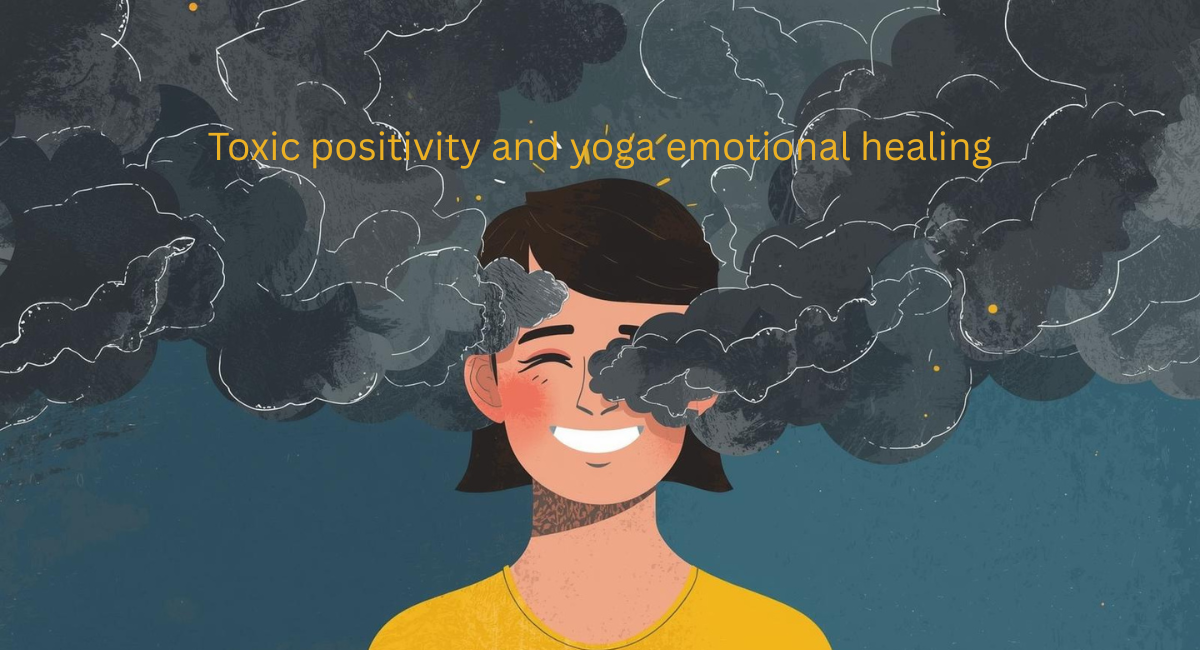
Written by Sumit Manav
Founder, Lifestyle Yoga & Manav Yoga — Master Yoga Teacher (25+ years). Focus: emotional regulation, breathwork, and mind-body wellness.
In today’s world, positivity is often promoted as the solution to emotional pain. We are encouraged to stay strong, stay grateful, and stay optimistic—no matter what we are going through. While positivity can be deeply supportive for mental well-being, problems arise when positivity is used to avoid, suppress, or deny our authentic emotional experience.
From both a psychological and yogic perspective, emotional health does not come from forcing ourselves to feel better. It comes from developing awareness, acceptance, and the ability to regulate our internal state.
In yoga philosophy, there is a principle called Sakshi Bhava, or the ability to observe thoughts and emotions without immediately reacting to them (Feuerstein, 2009). This approach closely aligns with modern psychological research showing that emotional acceptance improves well-being more effectively than emotional suppression (Gross, 2015).
When emotions are denied or pushed away, the nervous system often remains in a subtle state of stress. Mind-body practices such as yoga and breathwork have been shown to regulate the autonomic nervous system and support emotional recovery (Brown & Gerbarg, 2005).
This highlights an important truth: yoga helps regulate the nervous system and prevents toxic positivity—not by forcing “good vibes,” but by helping us process what is real.
To better understand this distinction, it is important to first define what positivity is—and when it becomes toxic.

Positivity involves things like gratitude, optimism, and positive reappraisal. You may have heard that positivity is good for well-being. On the flip side, maybe you’ve felt annoyed, angry, or uncomfortable when positivity was forced on you. Indeed, positivity can be good for well-being— as long as we’re not using it to avoid or suppress negative emotions. Then, it can become toxic.
Toxic positivity is defined as the act of rejecting or denying stress, negativity, or other negative experiences that exist (Sokal, Trudel, & Babb, 2020).
It can sometimes be difficult to distinguish positivity from toxic positivity. For example, if someone tells us, “Hey, look at the bright side,” we might feel like they are diminishing or denying our negative feelings. Because negative emotions are tools we use to get important needs met, we don’t just want to be shoving them away without acknowledgement. So, seemingly positive advice from friends can often feel like toxic positivity to the person receiving it.

Sometimes positive statements can unintentionally dismiss what someone is genuinely feeling. These examples help illustrate the difference.
“I’m having a bad day.”
TOXIC RESPONSE“But you have so much to be grateful for.”
“I don’t know if I can have a relationship with my Sister. She doesn’t treat me with decency and respect.”
TOXIC RESPONSE“She’s family. You should love her no matter what.”
“This job sucks.”
TOXIC RESPONSE“You’re lucky you even have a job.”
In these examples, someone is using positivity to get rid of our true or negative experiences.
On the other hand, say a friend tells us, “Hey, it’s okay not to be okay.” This shows acceptance of our negative emotions as well as compassion and gratitude. This approach is not toxic because it doesn’t deny our emotions and force us to feel something we don’t want to feel.

Positivity can become unhelpful when it is used in the wrong context or when it prevents us from acknowledging what we are actually experiencing.
One study showed that looking for silver linings is only beneficial in uncontrollable contexts. For example, if we lose our job, we might benefit from thinking about our future opportunities. But if we try to use positive reappraisal in controllable situations—or situations that we could change—we might actually be worse off (Troy, Shallcross, & Mauss, 2013).
Some research suggests that it is inappropriate to use positivity (positive reappraisal) when our identities are being threatened. For example, when people experience racial oppression, looking for silver linings appears to actually lead to worse well-being (Perez & Soto, 2011).
If people encourage us to use a specific emotion regulation skill that we’re not good at, it could actually leave us worse off. And for many people, positivity can be a difficult skill to develop and implement. So if you’re not good at being positive, optimistic, or reflecting on your situation to find the silver lining, it could actually be bad for you (Ford & Troy, 2019).
Most people think of positive emotion as a good thing, and more is better, right? Well, it turns out that too much positive emotion may actually be a bad thing. Too much positive emotion has been shown to be a risk factor for mania (Gruber, Johnson, Oveis, & Keltner, 2008). So, too much positive emotion actually can be a bad thing.
Being obsessed with happiness and focusing excessively on getting happy has also been shown to be bad for well-being (Ford & Mauss, 2014). It’s thought that this may create a discrepancy between how we feel now and how we want to feel. Indeed, having ultra-high expectations for happiness tends to be bad for our mental health.
Yoga offers a practical and evidence-based approach to emotional health by emphasizing awareness, acceptance, and nervous system regulation.
Rather than encouraging forced positivity, yoga teaches individuals to observe and experience emotions without suppression. This process aligns with mindfulness-based emotional regulation, which has been shown to improve mental health outcomes (Hofmann & Gómez, 2017).
Breathwork, or pranayama, plays a key role in this process. Slow breathing activates the parasympathetic nervous system, helping the body recover from emotional stress and improving emotional balance (Brown & Gerbarg, 2005). In simple terms: yoga helps regulate the nervous system and prevents toxic positivity by creating safety in the body, so emotions can be processed rather than denied.
Yoga also improves interoceptive awareness—the ability to sense internal bodily states—which is linked to improved emotional regulation and reduced emotional avoidance (Mehling et al., 2011).
In yoga philosophy, the principle of Santosh, or contentment, refers to accepting present-moment reality without resistance (Iyengar, 2002). This is fundamentally different from toxic positivity. It does not deny difficulty. Instead, it creates emotional stability from which genuine well-being can develop.
Practical takeaway: The next time you notice “forced positivity,” try this yogic reset:
Toxic positivity can be tricky. The benefits of positivity are very real and impactful, but at the same time, it can be easy to get positivity wrong. Hopefully, the guidance here will help you take what you can from the field of positivity psychology while still being able to prevent positivity from becoming toxic.
If you’d like to experience how yoga supports emotional balance and authentic well-being, explore:
These questions help us understand your natural, lifelong patterns — how you have generally been since childhood. Please answer based on your usual nature, not on how you feel these days.
You’ll only complete this part once.
This number is already linked to your saved Prakriti baseline.
Your existing Constitution stays saved. The new number will need its own Step 1 assessment.
Use the name you would like us to keep with your assessment.
We use your WhatsApp number to identify your Constitution baseline and keep your future check-ins connected.
You're ready for Step 2. We'll now look at how you've been feeling over the last 30 days.